
Prototype guardrail in public housing renovation
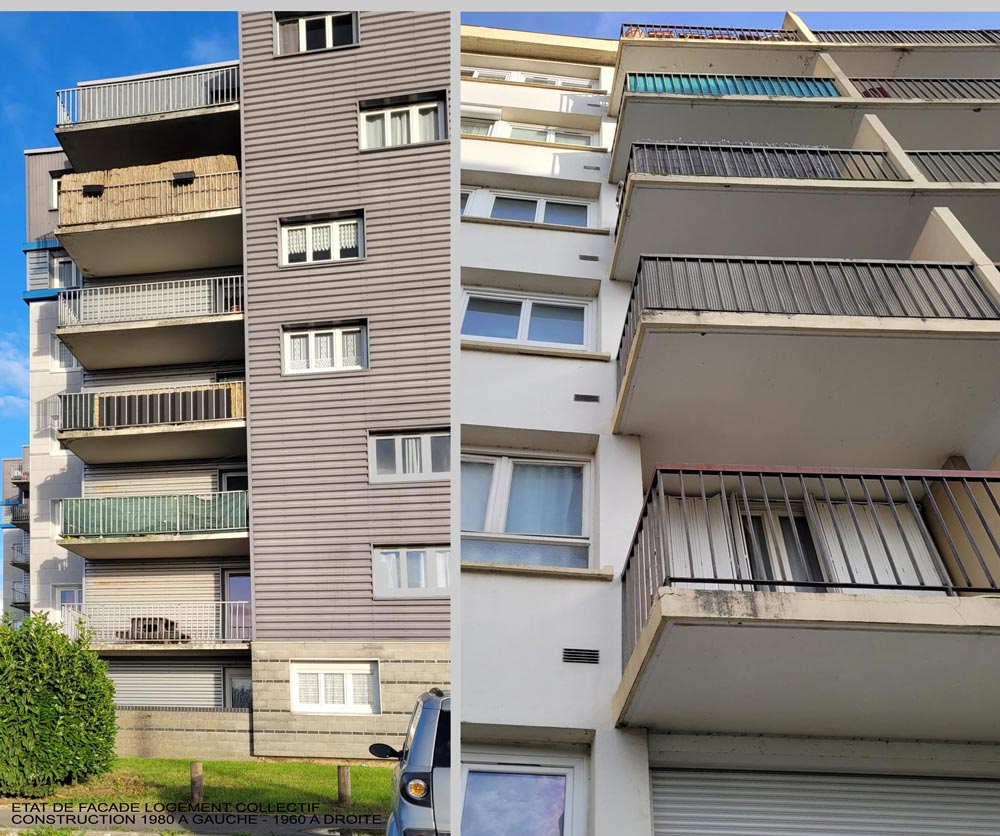
When high-rise buildings were constructed in Paris in the 1960s, the railings on public housing units were often built using materials that were common at the time, such as iron bars or reinforced concrete. These railings were generally characterized by their functionality rather than their aesthetics.
Wrought iron railings were quite common at that time. They were manufactured using traditional welding techniques to create simple, openwork railings. These railings were often installed on the balconies of public housing to ensure the safety of residents while allowing for adequate ventilation. The replacement of old railings is necessary to meet new safety standards.
In addition, some guardrails were made of reinforced concrete. These opaque guardrails were often integrated into the structure of the building itself during its construction. Reinforced concrete offered excellent strength and durability, but lacked aesthetic appeal. More than 60 years after the construction of a public housing block, the concrete is cracking, deteriorating, and losing its original color.
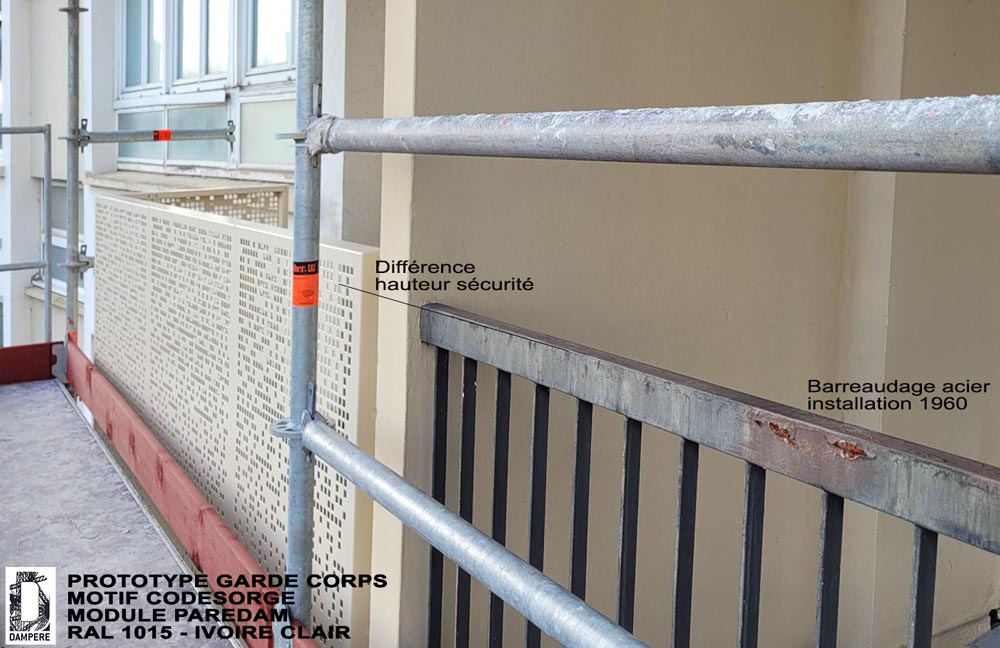
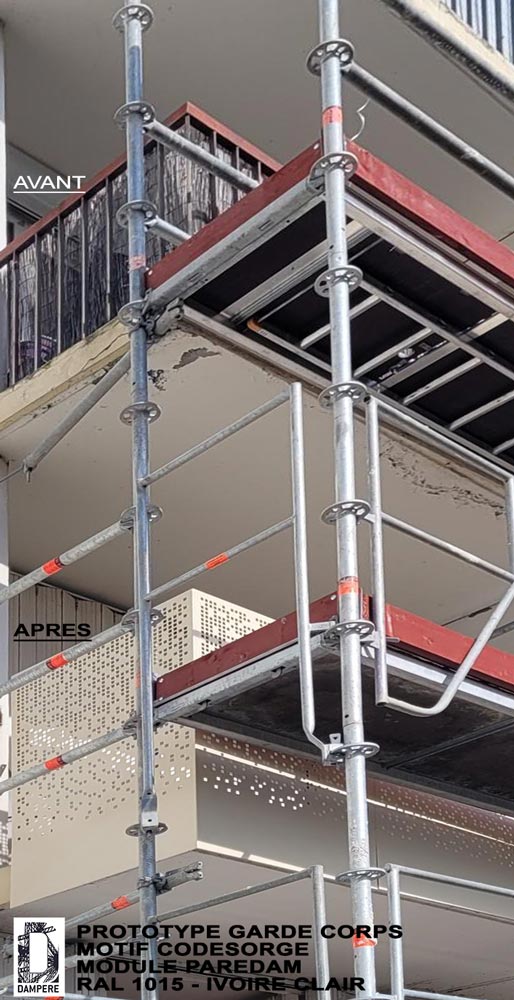
Overall, the railings in public housing from the 1960s were designed to meet the safety standards of the time while being functional and durable. Standards have evolved considerably over the past 20 years, which is why buildings need to be adapted. Although some of these housing railings may seem simple or austere by contemporary aesthetic standards, they have played a crucial role in protecting residents and in the design of the exterior spaces of public housing buildings. As the energy renovation involves changing the appearance of the facade, the work must be accompanied by the replacement of the balustrade. As part of the work, a prototype will be presented to establish the architectural requirements.
Renovation of 1960s public housing
The massive construction of public housing in the 1960s has an impact on the complexity of the facade and balcony renovation project. It is important to remember the context in order to understand the challenges of bringing balcony railings up to code. A brief summary of the history of collective housing in France gives us an insight into the construction constraints of the time.
Abbé Pierre's appeal in 1954 sparked a vast movement of solidarity in France, known as the "insurrection of kindness." In response to this appeal, the government launched an ambitious competition for the construction of Logements Economiques de Première Nécessité (LEPN) (essential low-cost housing). Emergency housing estates were built throughout the country, totaling more than 12,000 homes in 220 towns and cities from Paris to Marseille, including Lyon and Nancy, not to mention medium-sized towns.
At the end of the 1950s, France's post-war "reconstruction" period gave way to one of "construction," marking a turning point in the history of collective housing in Paris. People's minds turned to a promising future, symbolized by the launch of five-year programs for the development of low-income housing. The central government organized a series of competitions aimed at accelerating the pace of construction and reducing costs, which sometimes led to the discovery of poorly insulated facades and builders who did not always follow best practices. Quickly and efficiently, the industrialization of the construction sector led to a significant increase in production, a reduction in costs, and shorter construction times. This resulted in the completion of ambitious construction programs, the consequences of which we are seeing today, mainly in the form of cracked slabs and uneven floors.
On the one hand, there was ordinary social housing, mainly intended for the lower middle classes, and on the other, transitional housing with lower standards. This is how the concept of transit housing estates came into being and developed in the 1960s, in response to the massive influx of immigrant workers. Renovating these transit cities is very difficult, and often the choice is made to demolish the old public housing to make way for new construction.
The use of a guardrail prototype makes perfect sense, both in terms of the aesthetic appeal of the perforated sheet metal chosen for the balcony guardrail infill, and in terms of the color and combination of materials.
Replacement of concrete guardrails in public housing
A 100% concrete guardrail is considered too heavy for a social housing balcony for several structural reasons. Social housing balconies are often designed to support limited loads, as they are part of the wave of industrialization of housing with the risks that this entails. The additional weight of a concrete guardrail may exceed the intended load capacity, which could compromise the stability and safety of the structure. We see this in cracked facades and slabs that have shifted significantly over time. Concrete railings impose a load of several hundred kilograms on the outer edge of the balcony, which is the least supported part of the building. This excess load can cause deformation over the years.
Due to its weight, handling and installing a concrete guardrail can be more complex and labor-intensive.
A concrete railing can limit decorative and aesthetic options; it is heavy in a figurative sense. Its opacity does not allow any light to pass through, which may not correspond to the preferences of the occupants or the lighting comfort guidelines for a home. Opting for lighter and more flexible materials offers more customization possibilities while maintaining a much lighter overall weight on the balcony.
Replacing an old housing guardrail can be a tricky task, which is all the more reason to test the guardrail prototype before demolishing the concrete guardrail. Prototyping will allow several aspects of the project to be tested.
Before you start cutting the old concrete railing, carefully assess its condition and the materials used. Make sure you understand how it is attached to the building and which parts need to be removed. The position of the reinforcement bars is important for the structure of the building; in some cases, the entire vertical part of the concrete cannot be cut.
Use the angle grinder or circular saw to cut the sections of the guardrail according to the measurements required to remove it completely. Be sure to cut carefully and precisely, following the marked lines to avoid damaging surrounding structures.
Once the concrete guardrail sections have been cut, carefully remove them from the work site to avoid any risk of injury or damage. Be sure to protect the cut area with a coat of paint or plaster to protect it from the elements. Never leave iron exposed to the air and the elements, as this can cause rapid deterioration of the concrete slab.
Once the old concrete guardrail has been removed, install the prototype guardrail following the assembly instructions.
If you are not comfortable with this process or if you encounter difficulties, it is recommended that you hire qualified professionals to do the work.
Upgrading of railings to current standards
It is important to replace a non-compliant railing on a public housing balcony for several reasons. Public housing is subject to strict regulations regarding safety and compliance with building standards. A non-compliant railing can lead to regulatory non-compliance issues, exposing social housing owners or managers to legal penalties or fines. A non-compliant railing can pose a safety risk to the occupants of the dwelling, especially children and the elderly. Incorrectly spaced bars or a weakened structure can lead to falls and serious accidents. It is also important to ensure that no objects accidentally fall from the 5th floor, such as a can of flavored drink or a baby bottle carried by a child. The accidental fall of objects from a balcony poses a real danger to the occupants of the building.
Defective or non-compliant railings can also affect the overall aesthetics of the building and its surroundings. In some residences, balconies are weakened by completely rusted iron railings, whose drippings detract from the visual appearance of the facade. Replacing them with compliant and attractive railings can help improve the appearance and overall value of the dwelling.
Social housing managers are responsible for providing a safe and secure environment for residents. Maintaining compliant guardrails is part of this responsibility and helps to ensure the safety and well-being of occupants.
The first step before completely replacing the iron balustrade involves installing a prototype that complies with current guardrail safety standards.
Safety standards applicable to guardrails in social housing may vary depending on the country. France, Belgium, and Luxembourg have different assessments based on local regulations. Fundamentally, guardrails must comply with minimum construction standards. Guardrails must comply with the general construction standards applicable in the region. These standards include criteria such as strength, weather resistance, and structural durability.
Caution: The minimum height of the guardrail must prevent accidental falls. This minimum height varies according to local regulations, but is generally at least one meter or 100 cm from the finished floor to comply with French guardrail standard NF 01-013 and European standards for private balcony railings. Checking resistance to static loads and testing for resistance to dynamic impact are an integral part of the preliminary inspection of guardrails by inspection agencies. Guardrails must be designed to withstand significant horizontal and vertical loads to ensure that they remain in place in the event of impact or pressure being exerted on them.
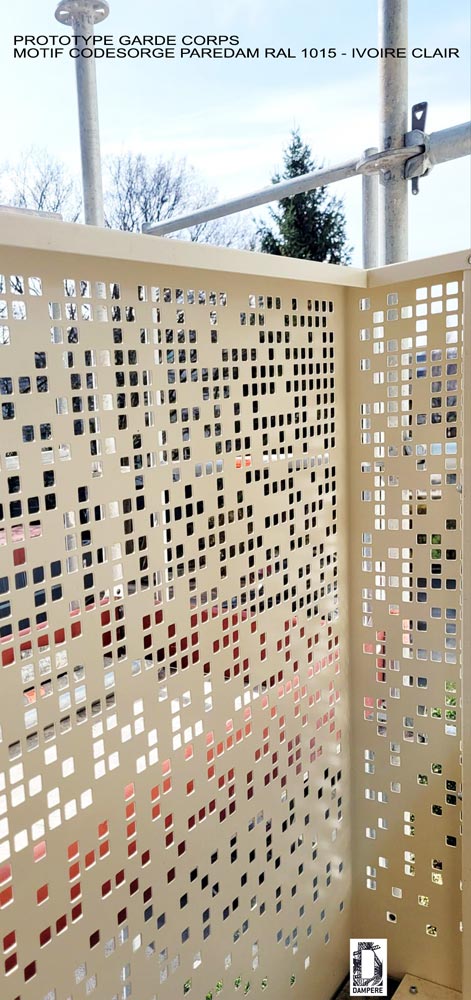
Protecting people from falling is the primary purpose of guardrails, which must comply with maximum spacing requirements to prevent children or adults from accidentally passing through, or at least to block the passage of their head, shoulders, or hips. This measurement is generally 10 to 11 centimeters to prevent children from passing through. This narrow opening to prevent children from falling does not prevent them from dropping objects they are carrying on a balcony. From toys to baby bottles, young children will be tempted to push any object through the bars to see what happens when it falls. Small objects such as toy cars or dolls can be found at the foot of a building after falling several meters. For this reason, we prefer to use Paredam guardrails with a sheet metal arrangement that seals all the gaps between the concrete slab and the lower rail of the guardrail. The guardrail can be completely closed off when the base sheet metal extends down to the slab, preventing objects larger than 10 mm from passing through, for the safety of residents.